It’s difficult to sum up The Gambia as a holiday destination, on the one hand there are package holiday options and we came across lots of people who had been going back to The Gambia for years. On the other hand it is a very poor country with very little infrastructure and still recovering from the effects of Covid. Those things seem to be in complete juxtaposition to each other but some how it works.


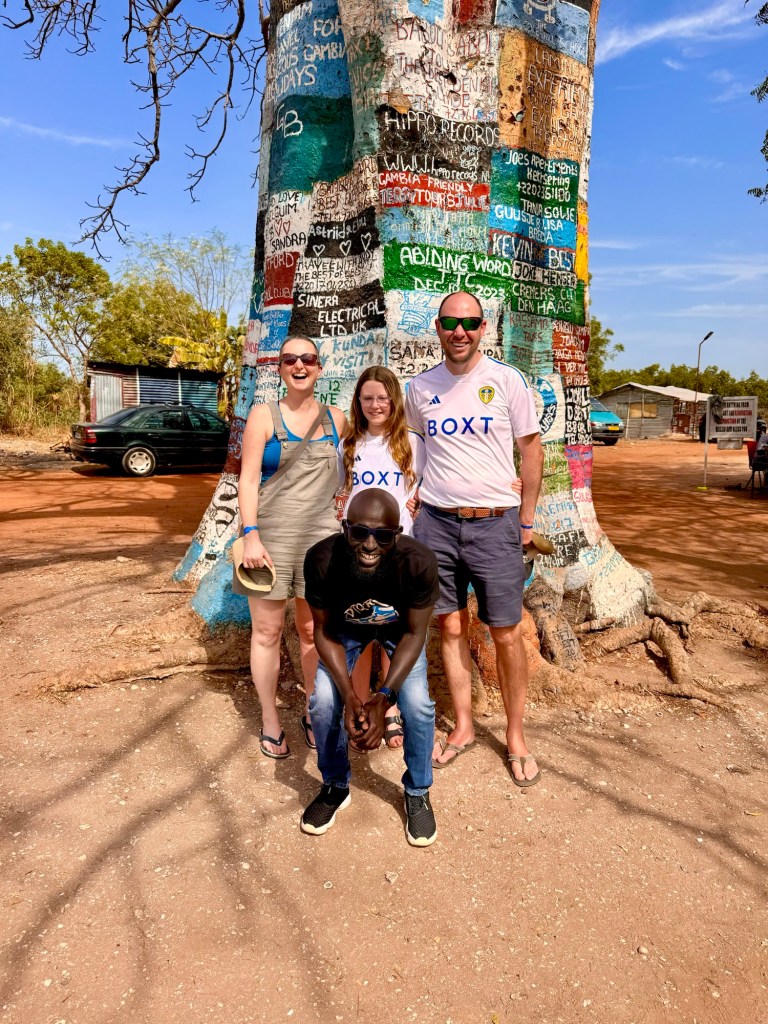
Our Itinerary
We had 10 nights between Christmas and school starting and the aim was to have an adventure, some sunshine and relaxation.
Day 1: Gatwick to Banjul (Night at Senegambia Hotel)
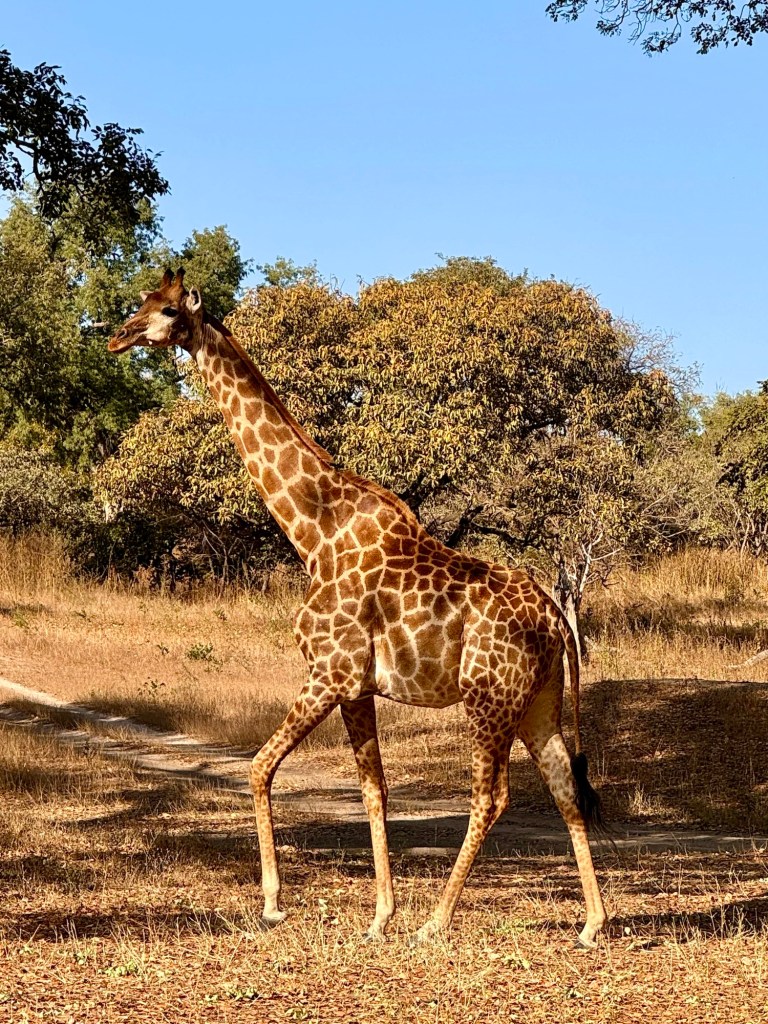
Day 2: Travel day to Fathala Wildlife Reserve, Senegal and evening safari
Day 3: Fishing Village and Island trip
Day 4: Local Village trip
Day 5: Return to The Gambia (Sun Beach hotel)
Day 6: New Year’s Eve celebrations
Day 7: Pool day
Day 8: Gambian cooking class
Day 9: 6 in 1 day trip
Day 10: Pool day
Day 11: Banjul to Gatwick

Logistics
We booked through The Gambian Experience who have been operating holidays in The Gambia for 35 years and our the only British company who specialise in holidays to The Gambia. Tui also do packages to many of the same hotels but as we also wanted to visit Senegal, The Gambia Experience gave us the flexibility to put together exactly what we wanted.
Time zone and temperature: The Gambia is an excellent winter sun destination and is is the same time zone as the UK so no jet lag. The temperature was in the mid to high thirties every day so plenty of sunshine and no rain.
Flights: The Gambia experience operate their own flights using Titan Airways which were surprisingly good. At the time of our trip they were operating flights on a Tuesday and Friday from Gatwick. The flight was about 6 hours and during that time there was a drinks service (tea, coffee and juices complimentary and other drinks available to purchase) and a light meal of a toasted sandwich and a snack box of cheese, crackers and cake.
Banjul Airport: Banjul is a small airport with only a few flights per day, it’s yet to catch up with the rest of the world in fact you can still sit in the outdoor seating area and watch your plain land. There are a couple of shops selling snack and souvenirs and a food counter selling hot food. If you are flying star class or star plus then there is a separate lounge area upstairs as well as a priority pass lounge. We used our priority passes for this lounge which was almost empty. They had a small selection of hot food, snacks and hot and cold drinks. You can also purchase food from the food counter downstairs and have it brought up.
There are porters available on arrival and departure to help with baggage.
ATM’s are available in the arrivals hall to take out money as well as money exchange. SIM cards are also available for purchase at the airport.
Money: We were told before we went that The Gambia accepts Euros, Pounds and Dollars as well as the local currency of Dalasi while this is the case we found that many smaller business and those that we were tipping did prefer Dalasi as they can find it difficult to exchange other currencies. We were asked by staff in the hotel if we would exchange some foreign currency that they had been given as a tip. There is an ATM in the airport as well as in lots of the main tourist areas, when using the ATM’s you need to check that they take the card you are using as some will only take Visa and others Mastercard. We used our Revolut card with no problems. You can also exchange money in hotels and at various currency exchange places, you will usually get a better rate of exchange outside the hotels.
Senegal use the West African CFA Franc, we never actually managed to exchange any currency in Senegal as Fathala Wildlife Reserve took card and allowed us to pay in Pounds or Dalasi. Most places will take any currency but you are creating extra work for them as they then need to exchange this. We didn’t go anywhere in Senegal where we found an ATM.
Plug sockets: The information online listed a string of different socket types. We found that all the hotels we stayed in used the European sockets (2 round pins) but the airport had the UK 3 pin sockets. It’s a good idea to bring a multi-purpose travel adapter so that you are prepared for anything. USB sockets haven’t made it to The Gambia yet.
There can also be an issue with power cuts and although these happened quite often they were usually short lived. Bringing a power bank is a good idea as a back up.
Internet: There was an announcement on the plane and again on the bus to the hotel warning us not to use data roaming as it would be very expensive. While we were in The Gambia, Pip and I relied on hotel wifi to stay in touch with the world and braved 3 days without internet in Senegal, which was actually really lovely. The wifi at the hotels was patchy, good enough to access most websites but I wouldn’t have wanted to rely on it for a work call.
Andy did buy a SIM card in The Gambia, he arranged it through the front desk at the hotel who took his passport and money and went and sorted it out for him. He went with 3GB for 900 Dalasi which he could have probably got for less elsewhere but for convenience that was fine.
Water
The tap water is not ok to drink in either country so but bottled water was either automatically provided or readily available to purchase.
Vaccinations and Malaria tablets
Malaria tablets are needed for both Senegal and The Gambia.
Vaccination wise you should contact your local travel clinic or GP for advice but it is recommended that you are up to date on all your boosters and that you consider also having; Hepatitis B, Meningococcal Meningitis, Rabies and Typhoid. For Senegal you need proof of a yellow Fever vaccination to cross the border, Pip had hers at the Superdrug travel clinic as well as getting her malaria tablets from there.
Safety
The Gambia and Senegal are both very safe countries and we always felt safe. We chose to travel with The Gambia Experience and use organised tours so that we were accompanied. The main income of The Gambia is tourism so there is the inevitable jostle to be the ones to sell you something or get our business. We did find that we got much less hassle than other places we had been in the world and usually a ‘no thank you’ was enough.
What we did:
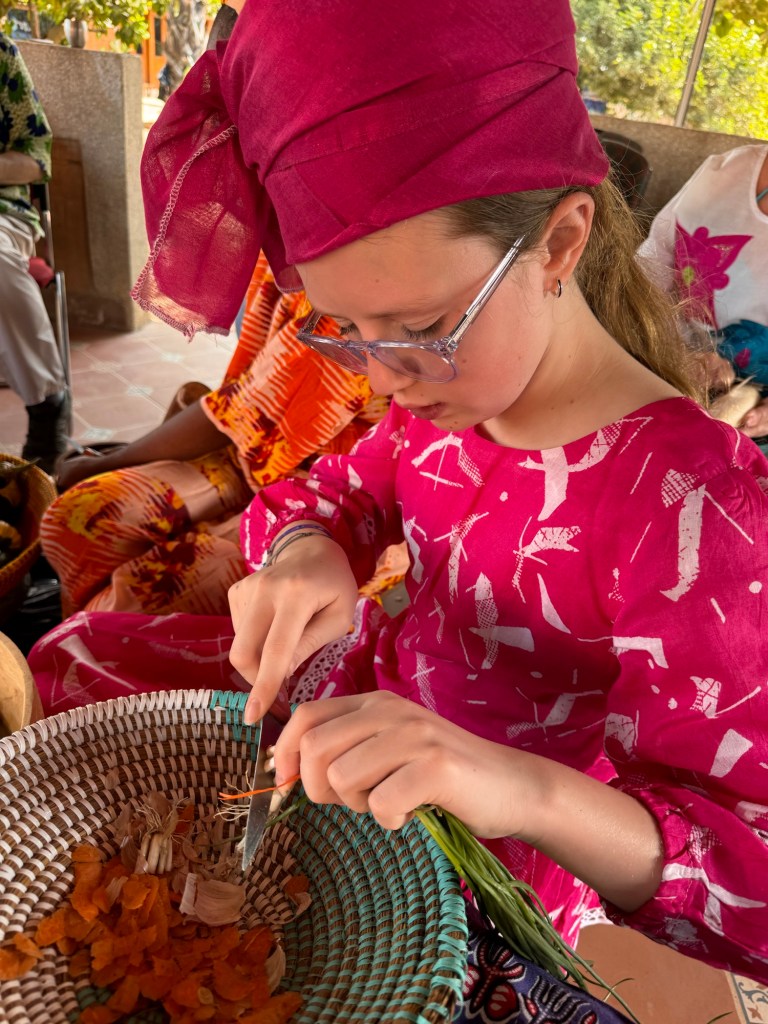
Ida’s homecooking class – This was a brilliant way to get hands on with Gambian culture and food. Ida is a Gambian woman who studied in London and has worked in hospitality her whole career. The day consists of dressing up in traditional Gambian clothing, visiting the fish market to buy the ingredients for lunch and then a trip to her home to cook lunch and experience some Gambian music. Pip absolutely loved this experience and really got stuck in with cooking, chatting to the other guests and shopping in the market. We even learned how to play the Gambian rules of Worrey and she now has her own set.
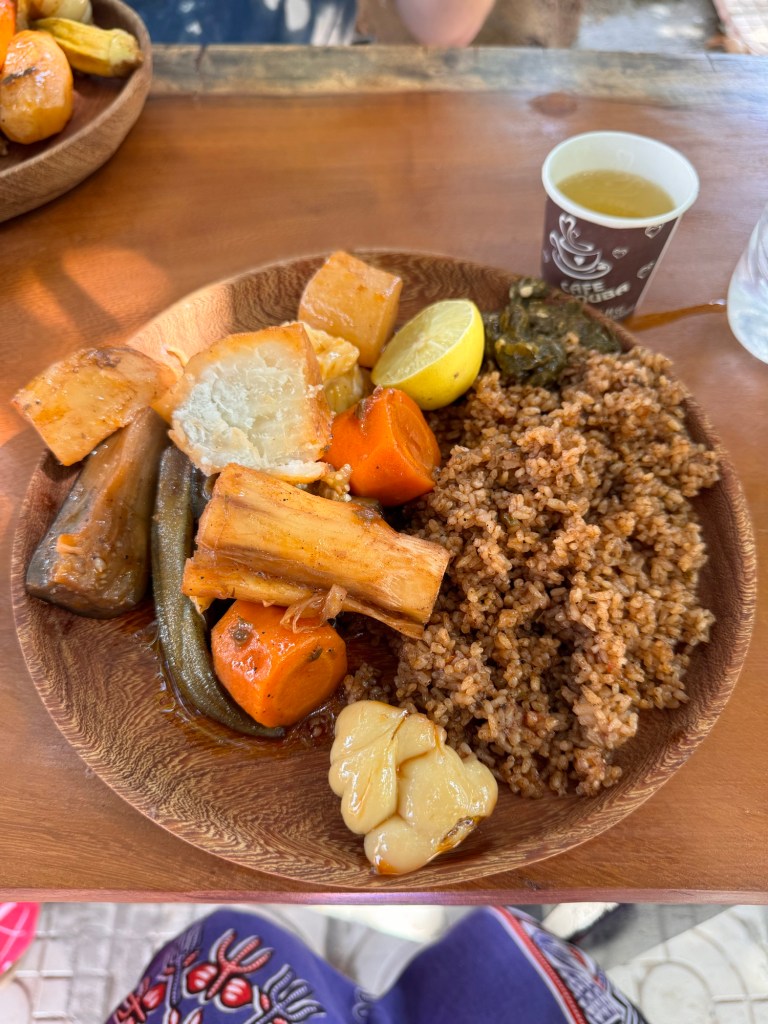
We ate benechin which is a traditional Gambian rice dish and Baracuda fish, they did a separate vegetarian dish for me. We also had fruit for desert.
You will need some money for this activity of you want to buy drinks, souvenirs and to tip the staff and driver.
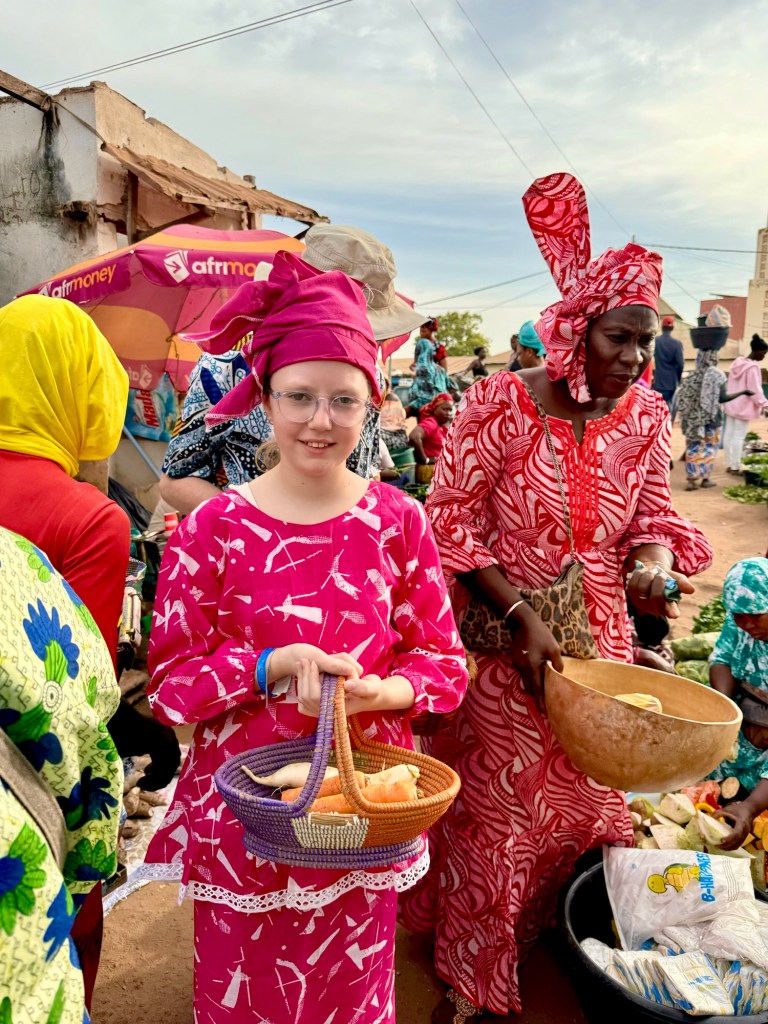

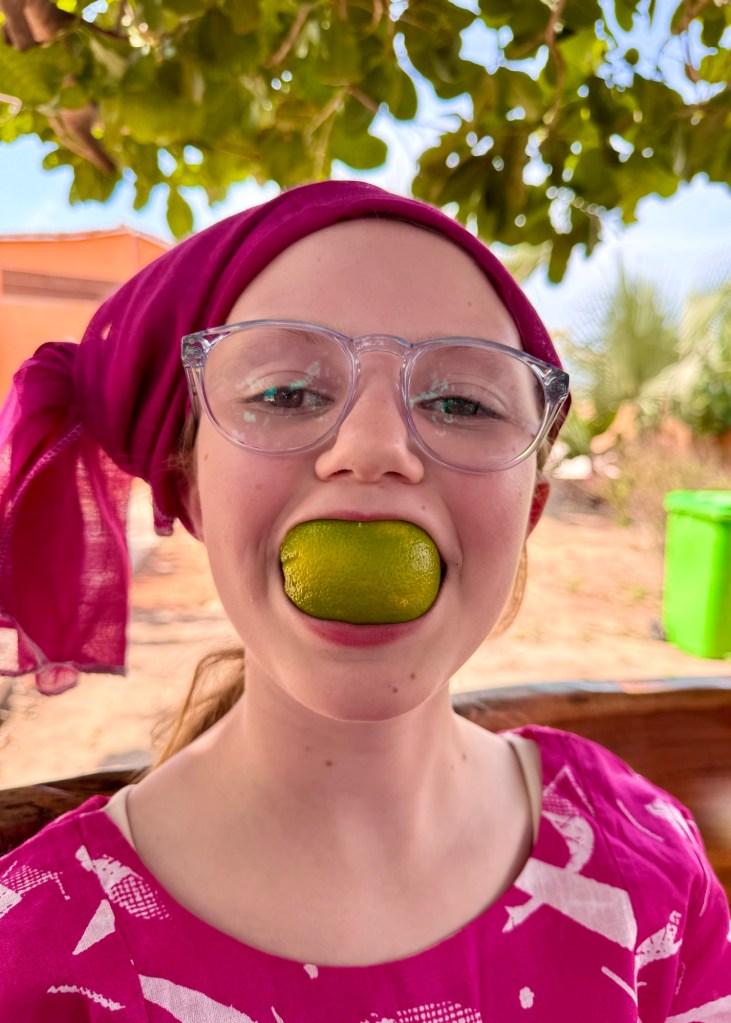
6 in 1 trip – I’m not sure that we actually did 6 things on this day trip but we had an excellent time and if you want to get a feel for all things Gambian then this was an excellent way to do it.
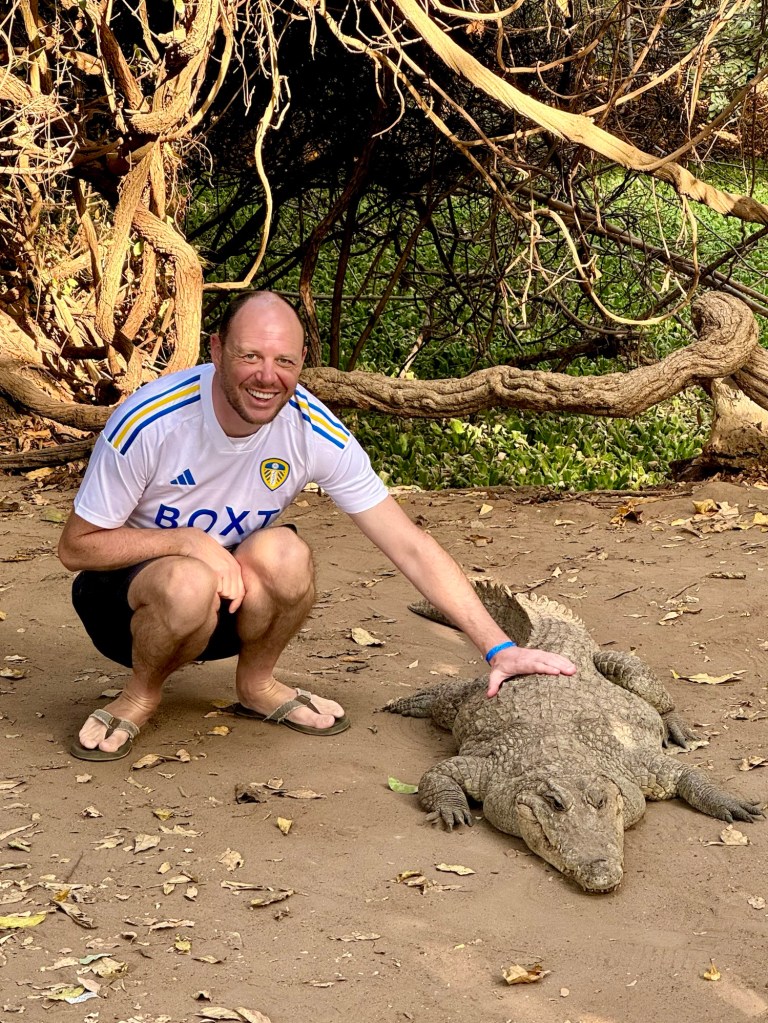
We started at Kachikally Crocodile pool where there is a really interesting museum about the history of The Gambia, its tribes and its history as a British colony. We then moved on to the crocodile pool where you can get up close with the crocodiles and give them a stroke. The crocodiles’ keeper feeds them well and solely on fish so they don’t have a prey drive for red meat and are very chilled out, he also manages their numbers. The water of the pool is said to assist with fertility although you don’t have to actually bathe with the crocodiles, just in water taken from the pool.
Our second stop was the market which was huge and bustling, you can really buy anything and everything there. Andy bought himself Gambian and Senegalese football shirts.
Our third stop was a mangrove oyster farm, it was the wrong time of year for oysters but we were still able to have a look around and learn how the oysters are farmed and how the shells are used for building materials and animal food.
We then had a lovely lunch at Paradise Beach where we had a swim and some food while watching the fishermen bringing in their catches and the cows wandering up and down the beach.
Our last stop was due to be the fish market but as Pip and I had already been the day before we opted to skip this stop and instead we visited the Commenwealth War cemetery.
Our driver and guide was wonderful, really helpful and friendly and was great at answering all our questions.
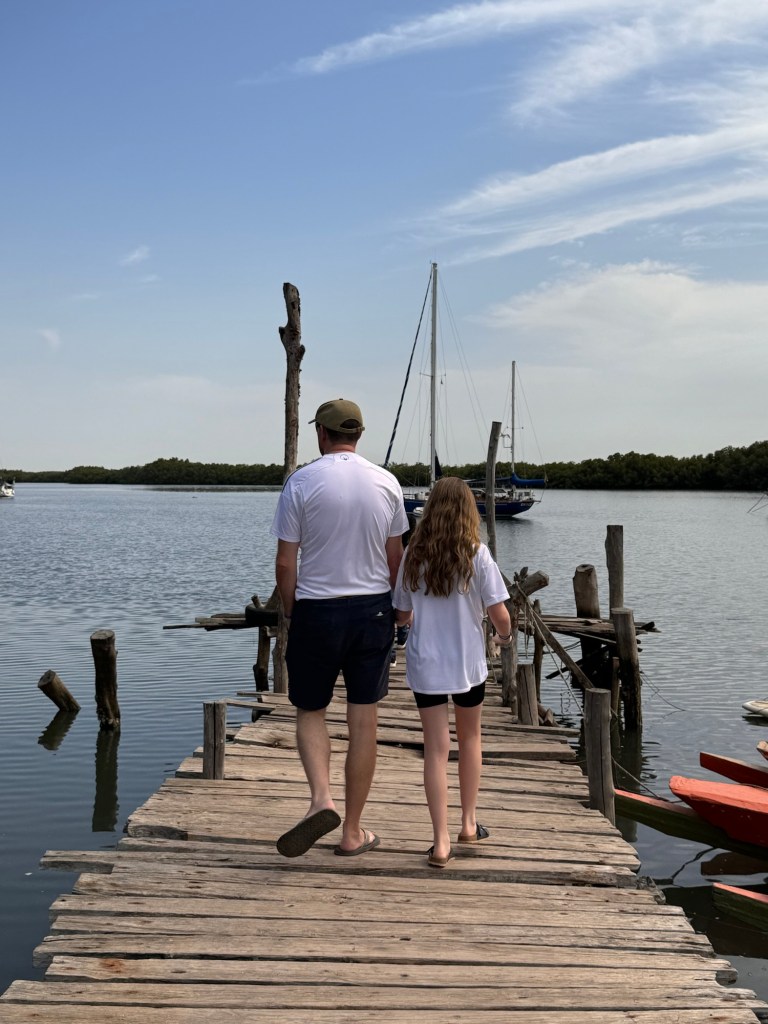
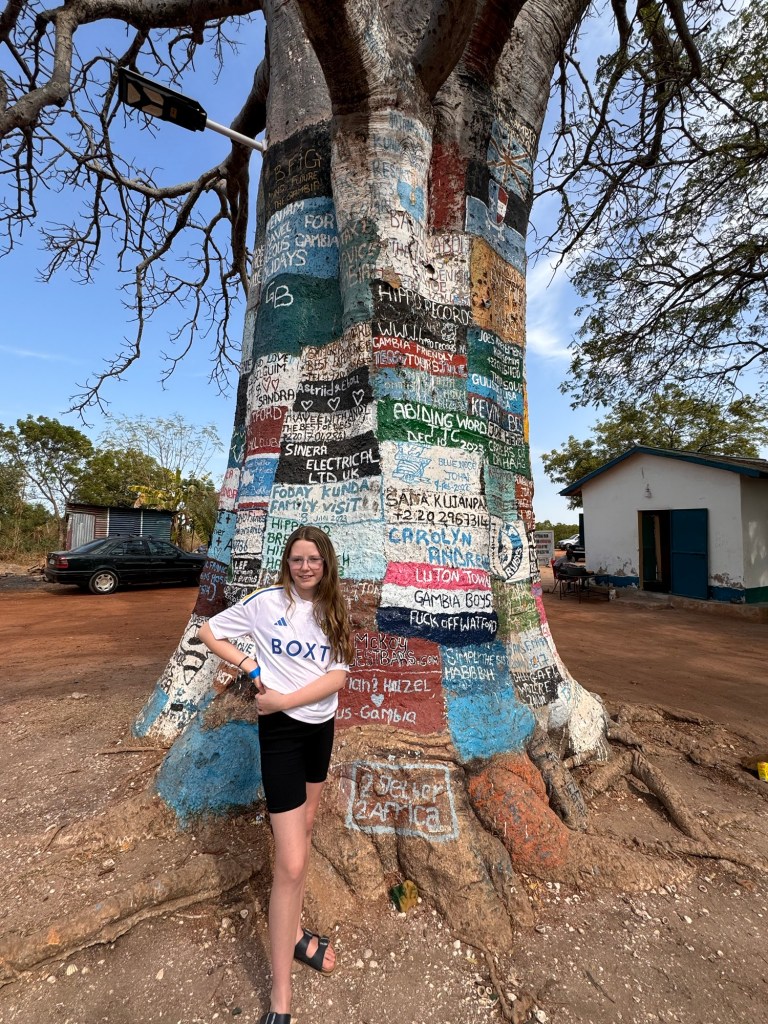
3 night trip to Fatal Wildlife Reserve, Senegal – You can found our blog post about our time in Senegal here.
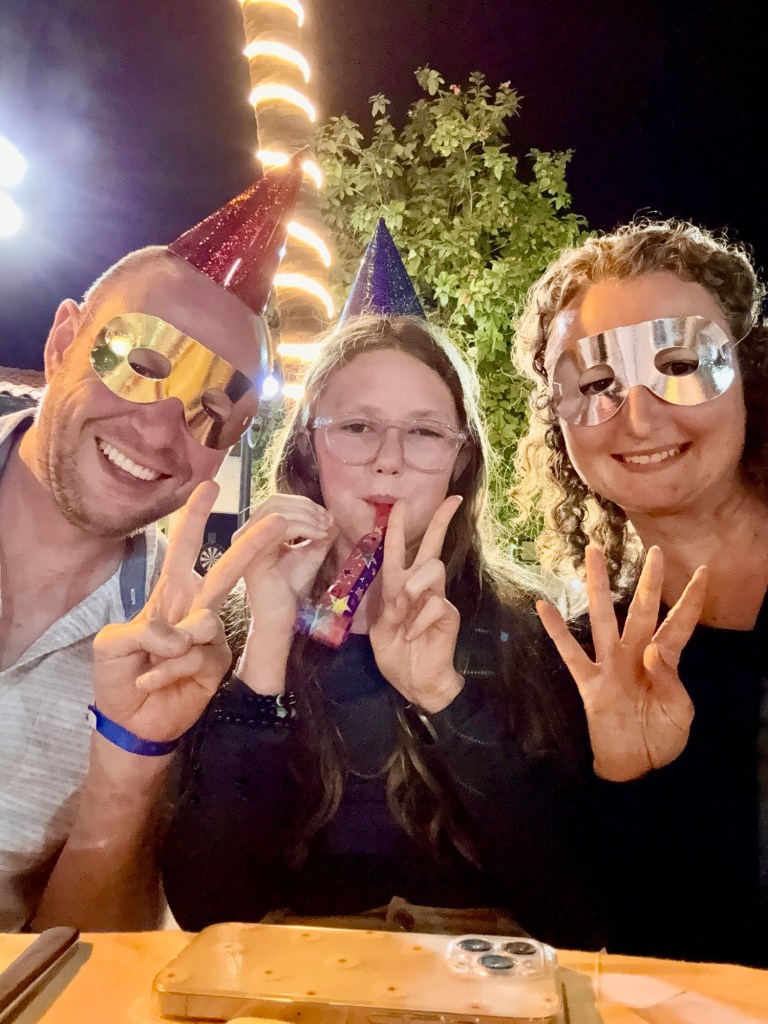
New Year’s Eve Celebrations – New Year’s Eve was a gala diner at Sun Beach’s sister hotel Ocean Bay Hotel. This was a buffet dinner and evening entertainment. The cost of this was included in our package although we did need to book a table when we arrived at the hotel, we sat with another family from the UK and a family from Guinea Bissau. The entertainment was a live singer and traditional dancing and was very good. Tuk tuk’s were provided to take guests between the two hotels which we were pleased about as the streets were so busy just after midnight as we headed home.
Our thoughts
We really loved our trip and felt it was just the right level of adventure and relaxation. Both The Gambia and Senegal are very poor countries with very little infrastructure outside of the hotels, most roads are dirt roads and there is rubbish everywhere. The hotels are not necessarily going to be the level that you would expect from a European hotel, however this just added to the adventure and the friendly people, food and sunshine completely made up for it. We would definitely visit again and would recommend for anyone looking for an easy winter sun destination.
We visited in December 2023 when Pip was 11.
 Go everywhere, Do everything
One thought on “The Gambia and Senegal – 10 night itinerary”