Socotra has been on my radar for a while, I knew it was an incredible place to visit and the only easy way to visit Yemen so when Janet’s Journey’s announced they were running a trip there I was in without a second thought! I went without many expectations as with all Janet’s trips it is far better to go with the flow and let each day unfold as a surprise, as a result everyday had several ‘wow’ moments.
Socotra
Socotra is a small island in the body of water between Yemen and Somalia. It considers itself separate from mainland Yemen with its own culture and language but does fall under the government of Southern Yemen and you will see the southern Yemen flag all over the island.
The island is only roughly 80 x 40 miles but was designated a UNESCO World Heritage site in 2008 due to its global importance in biodiversity. 37% of Socotra’s 825 plant species, 90% of its reptile species and 95% of its land snail species do not occur anywhere else in the world making it a very unique place to visit.
The set up
We were a group of 9 women with 3 drivers and a Guide. The drivers spoke varying levels of English and Arabic and our guide spoke fluent Arabic and good English.
We also had a kitchen crew of a cook and assistants who organised and cooked 3 meals a day for us.
Our Itinerary
Regardless of the tour company you choose to go with, your itinerary is going to be roughly the same due to the size of the island. We went with Socotra Rafa Tours one of many locally run travel companies on the island, whose main industry is tourism.
There was an itinerary but also some flexibility and a lot of travel time and down time so even though we did a lot, it didn’t feel like non-stop trip.
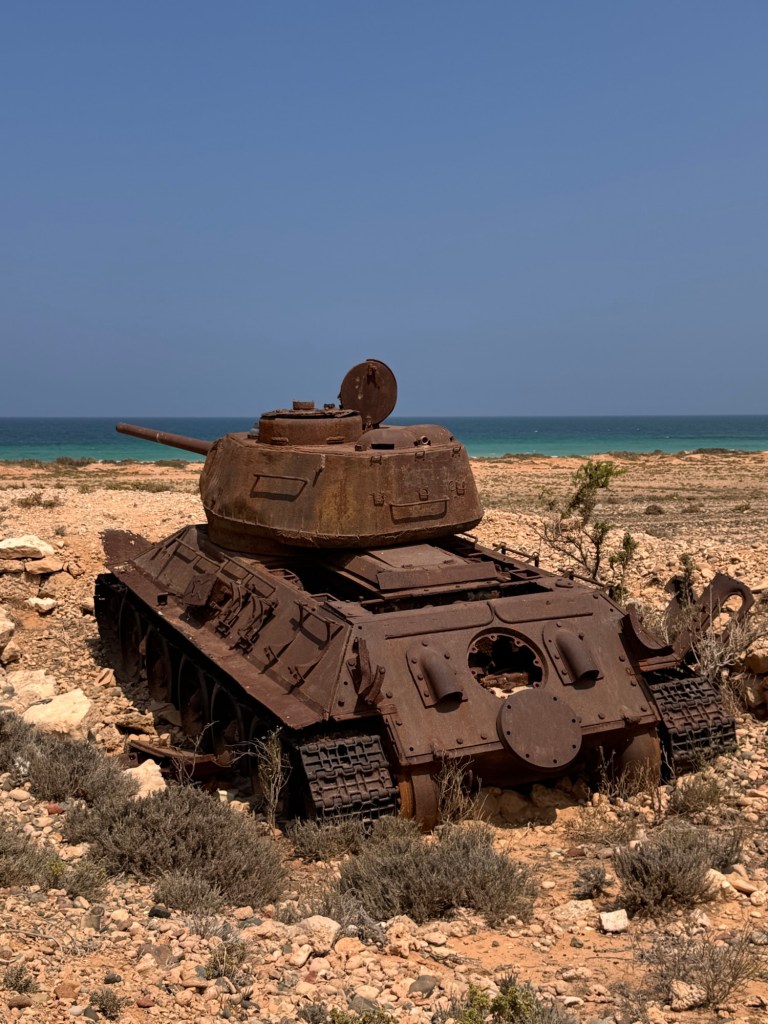
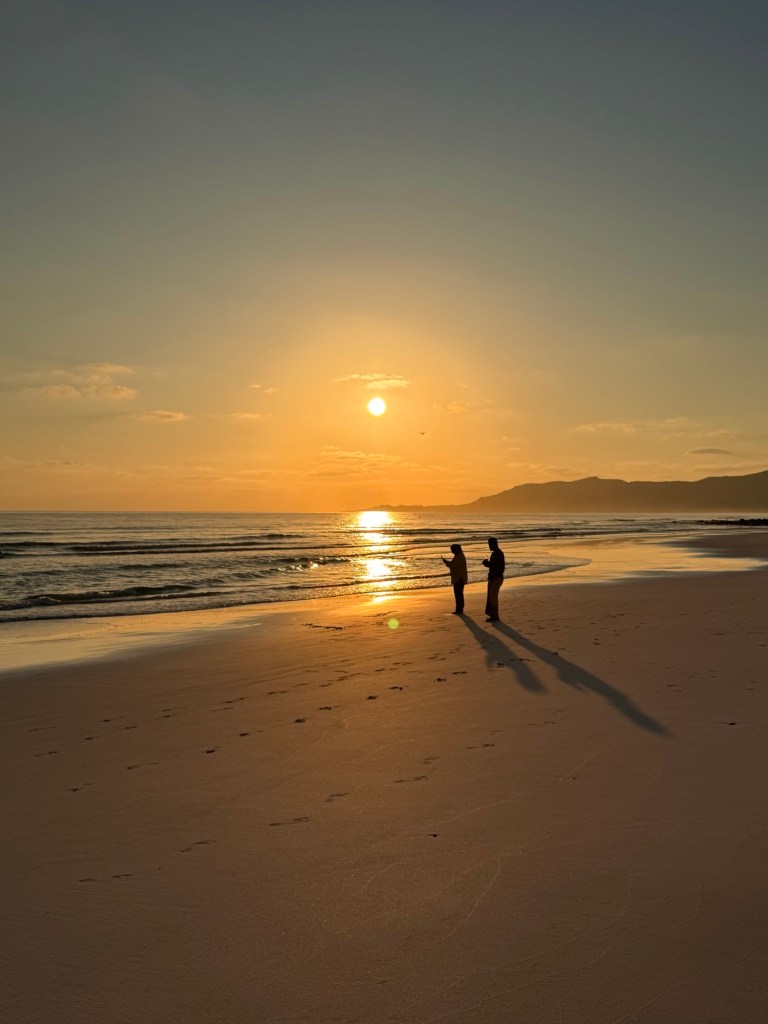
Day 1: We arrived in to Socotra International airport early afternoon and headed straight to Detwah Lagoon with a quick stop to see the Russian tanks abandoned on the island. The afternoon was spent exploring the beach, swimming and watching the sunset from a viewpoint above the beach.
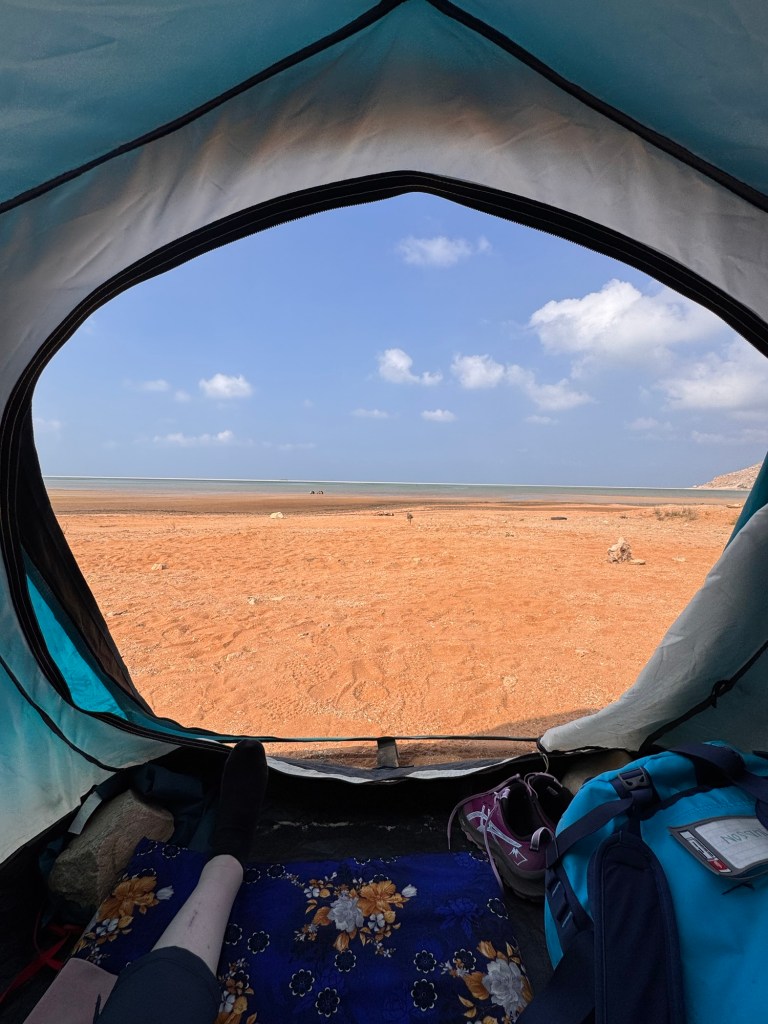
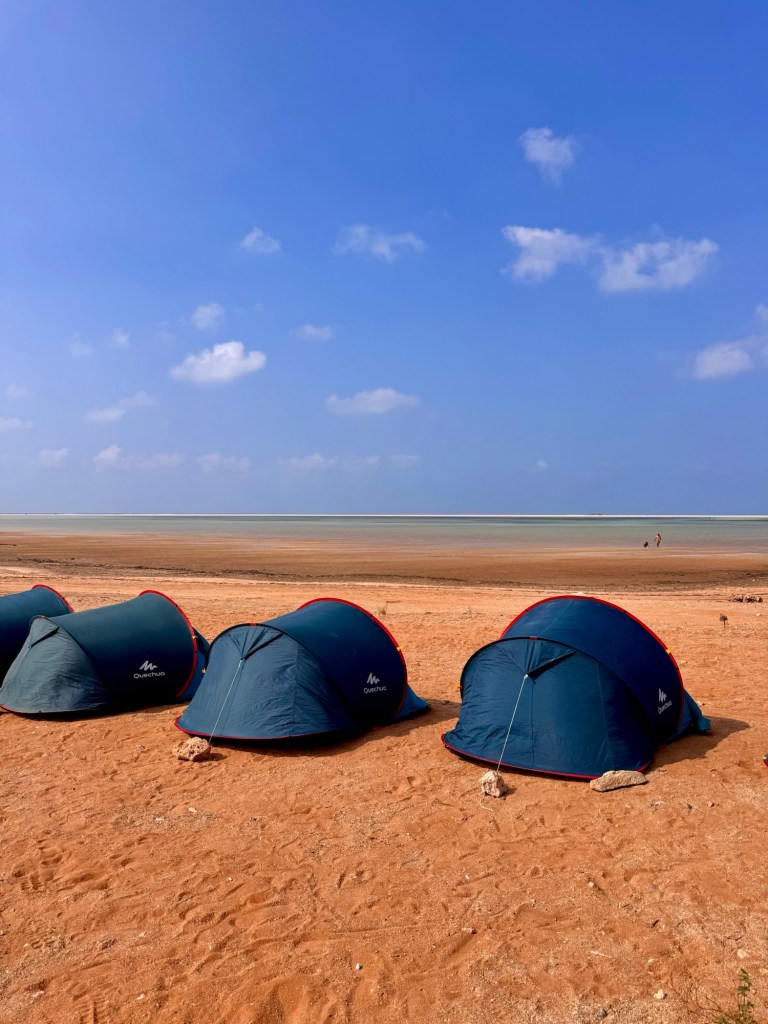
Night 1 was spent camping on the beach at the lagoon on beautiful white sand with a very basic squat toilet and sit down toilet.
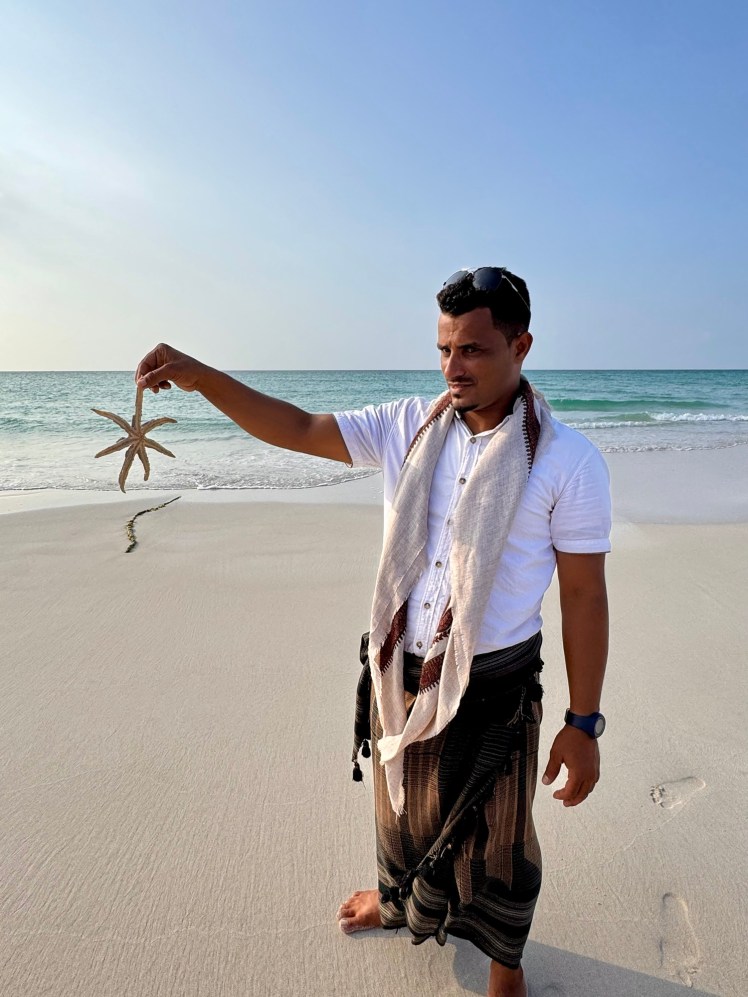
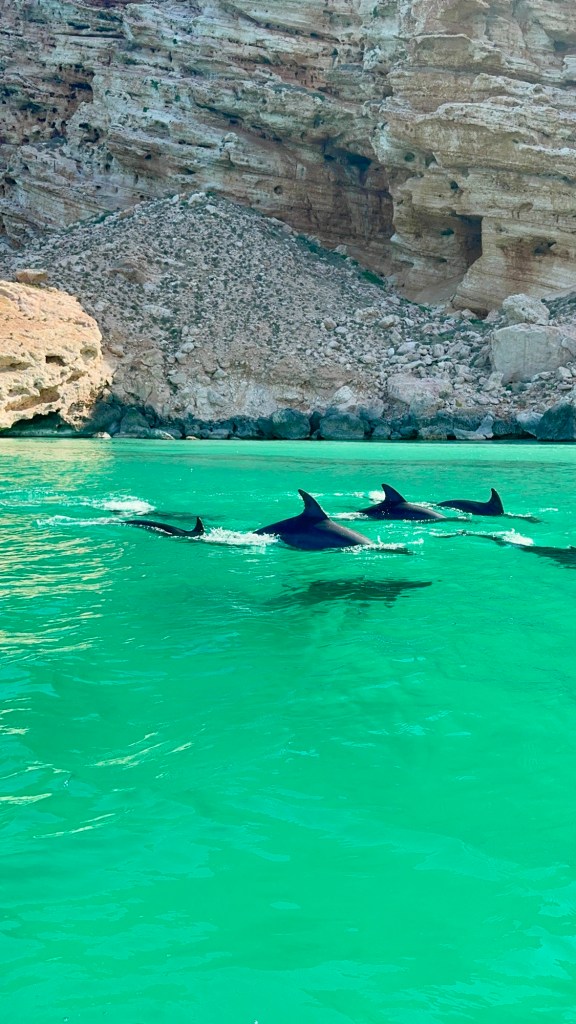
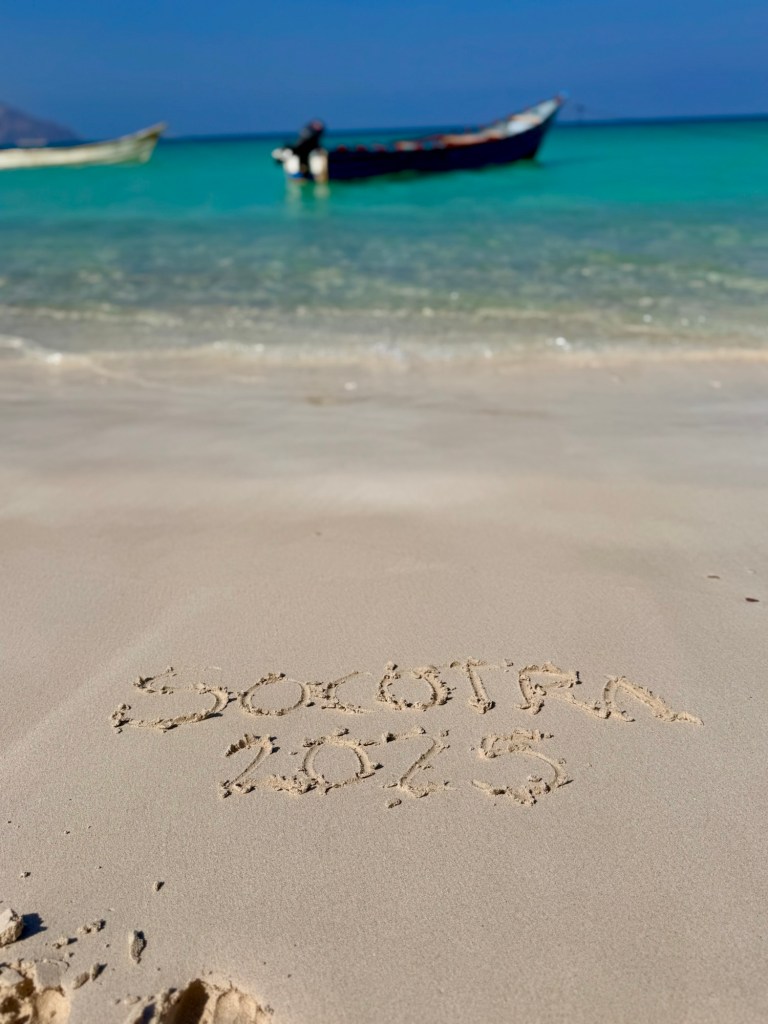
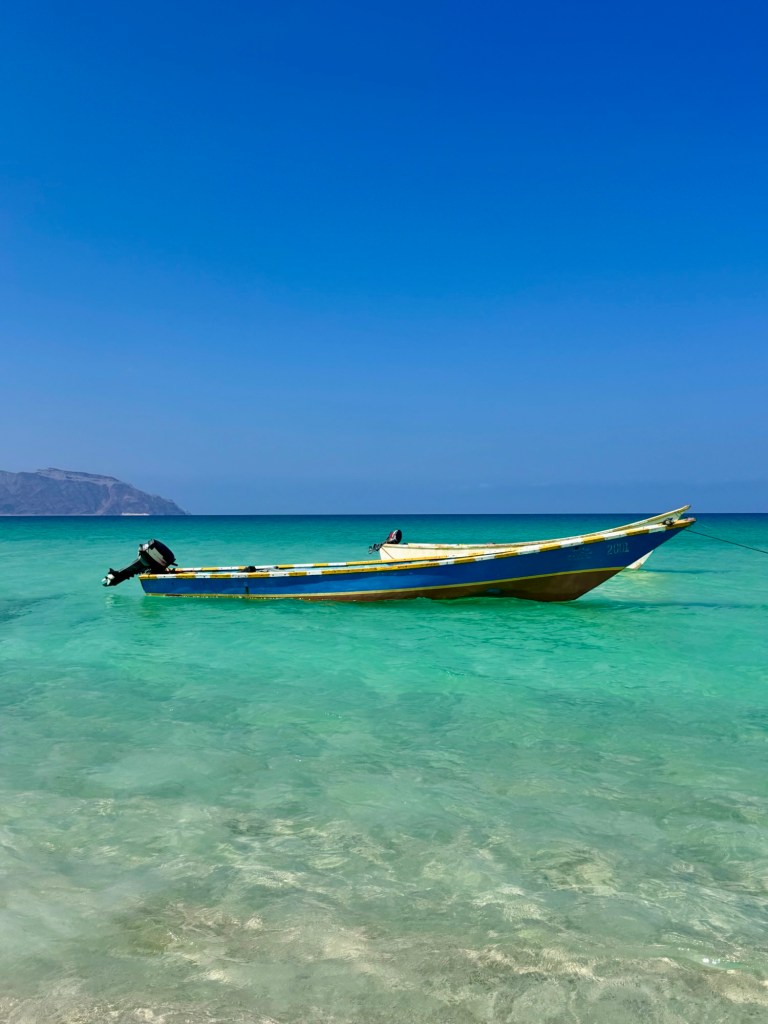
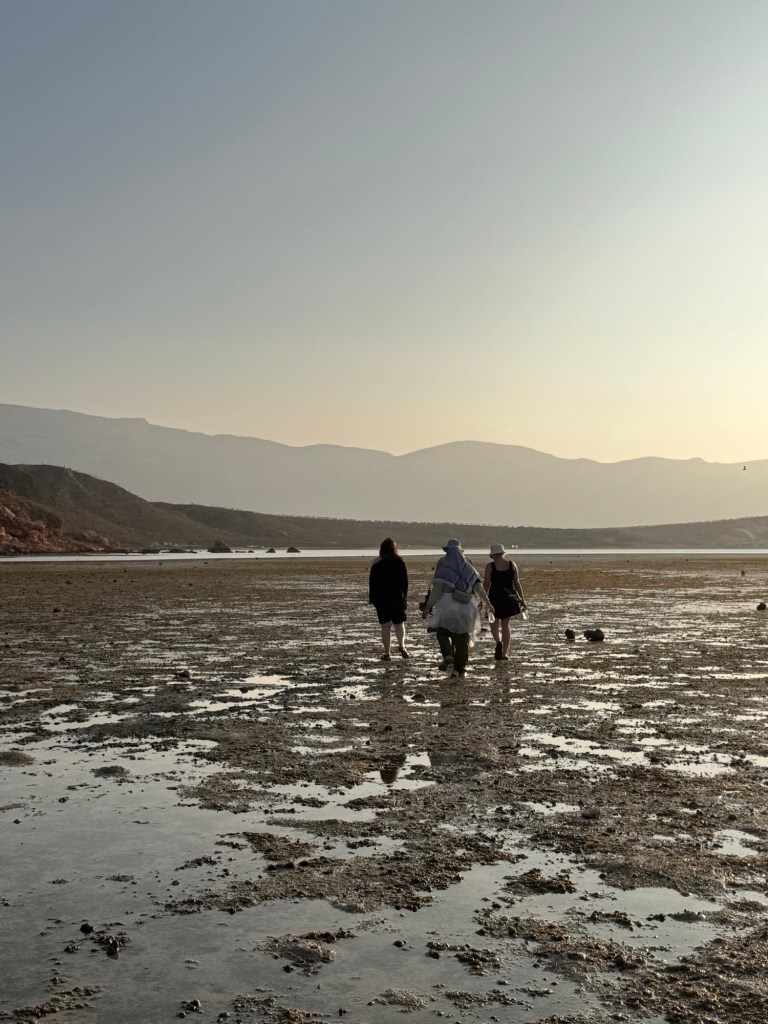
Day 2: We started the day with a short drive to a local beach where we boarded two small fishing boats and set off around the coast with no idea where we were going. The sea was the most amazing turquoise colour and so peaceful. We came across a small pod of dolphins who swam next to the boat and were just hanging out by the shore. We then carried on around the coast where we found an even bigger pod of dolphins and a spotted couple of babies swimming before arriving at Shuaab beach which is the most beautiful beach of white sand and turquoise sea. We spent a couple of hours at the beach swimming and then headed back by boat for lunch at our camp.
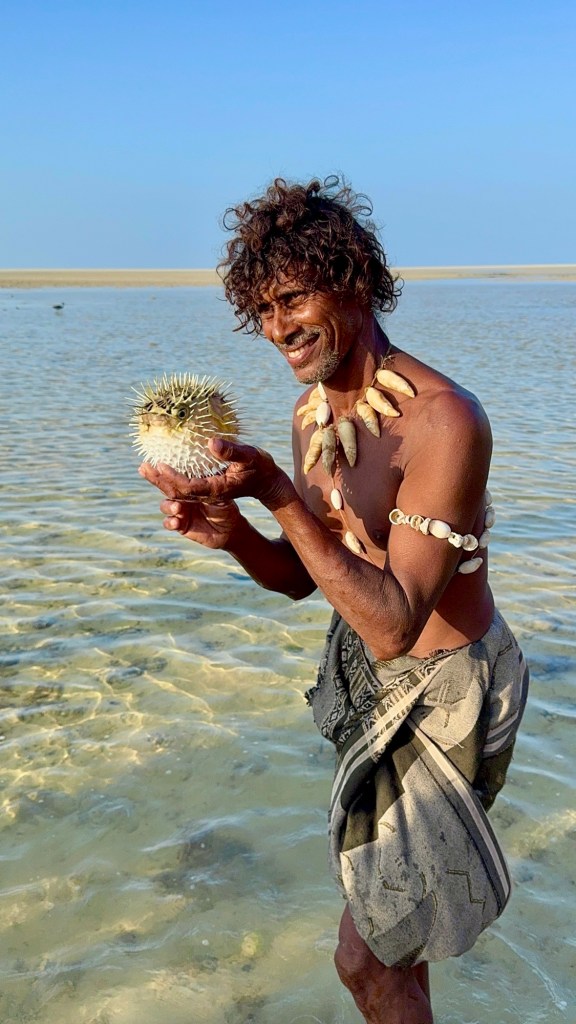
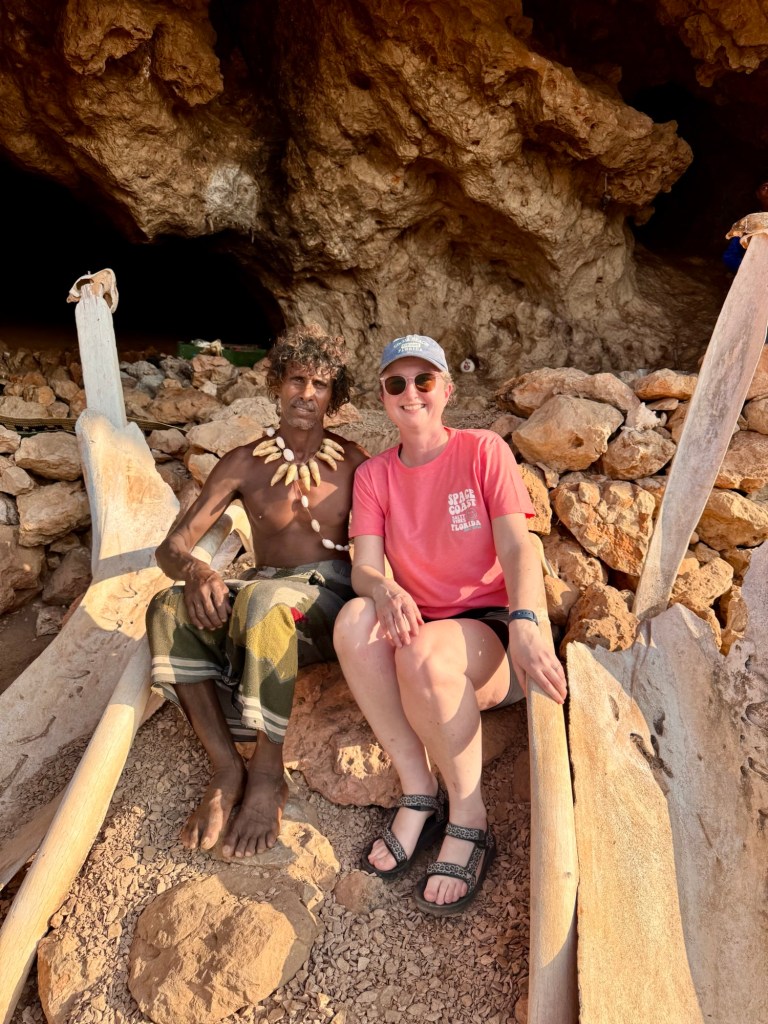
After lunch and a rest we headed up the coast on foot in the opposite direction to visit the Caveman of Socotra. Abdullah lives in the cave that he was born in and is a complete character. He invited us in to his cave, told us stories about his life and the tourists he has met. After we had drunk tea with him in his cave we walked down to the lagoon where he took us on a sea safari, showing us sea cucumbers, sea potatoes that squirt red ink, puffer fish, stingrays and eels. Meeting Abdullah was one of the highlights of the trip, he is so entertaining and his sea safari was such an interesting experience.
Night 2 was spent in the same camp as the first night.
Day 3: We were up bright and early to pack up camp and set off in to the mountains. When I say in to the mountains, I literally mean we drove up the side of a mountain on what could loosely be described as a road. We stopped at a wadi for a break and a chance to take a dip although there wasn’t much water in the river. We then continued up the mountain to the Dragon Blood Tree forest. Dragon Blood trees are endemic to Socotra.
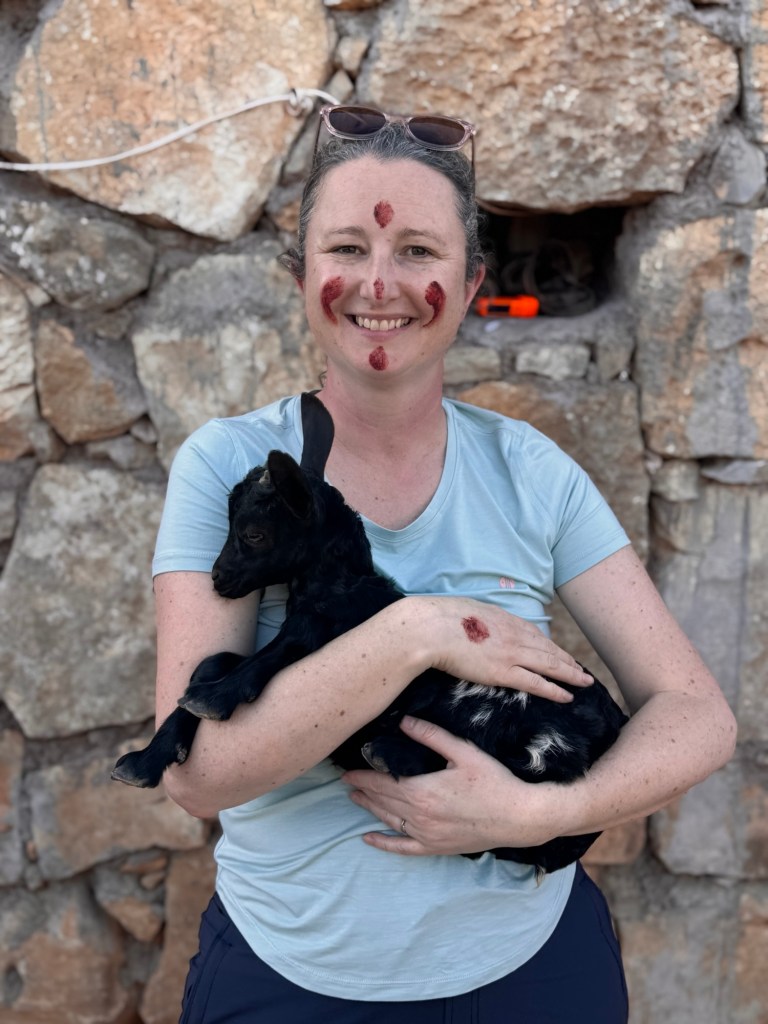
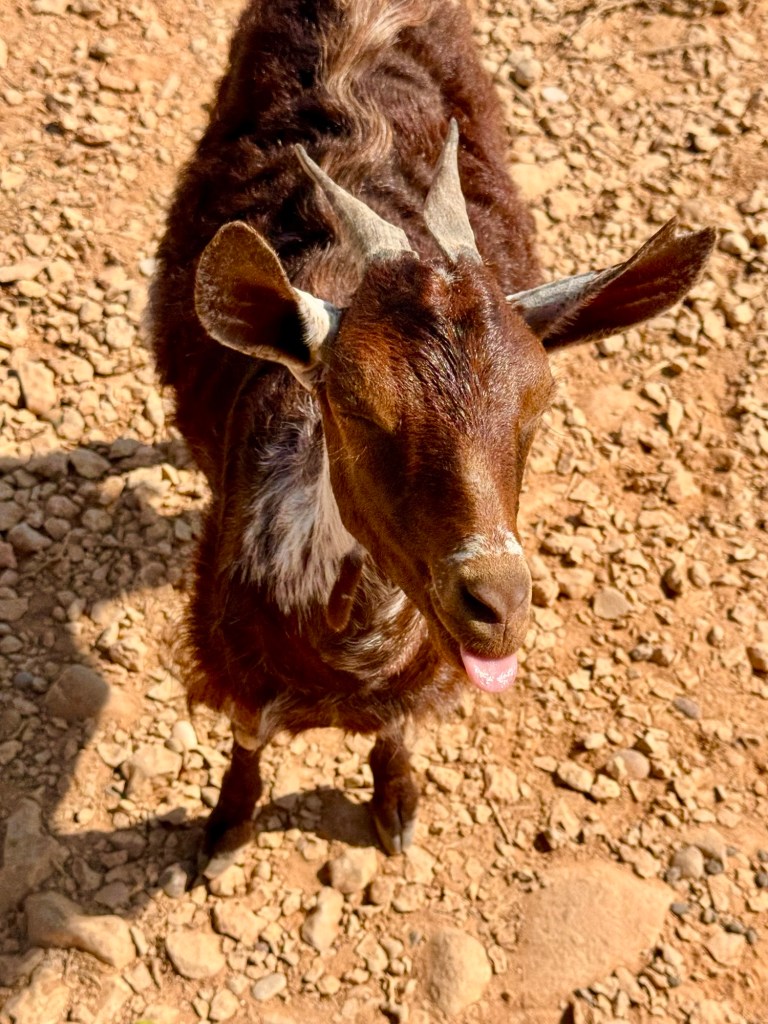
After lunch at our camp we walked to visit a local house where they explained how the use the resin from the dragon blood tree as medicine and for anti aging, we met a couple of baby goats and were shown around their garden.
We then headed back to camp and in to the Dragon Blood tree forest to find a spot to watch the sun set over the trees and mountains.
Night 3 was spent wild camping in the dragon blood tree forest with no facilities.
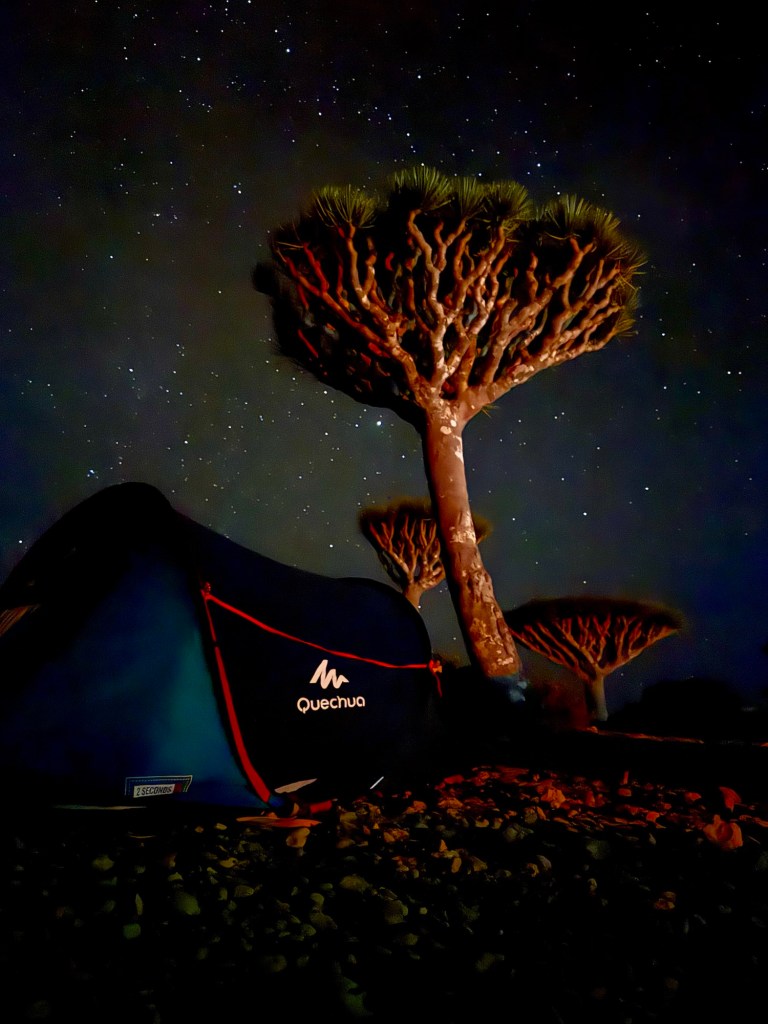
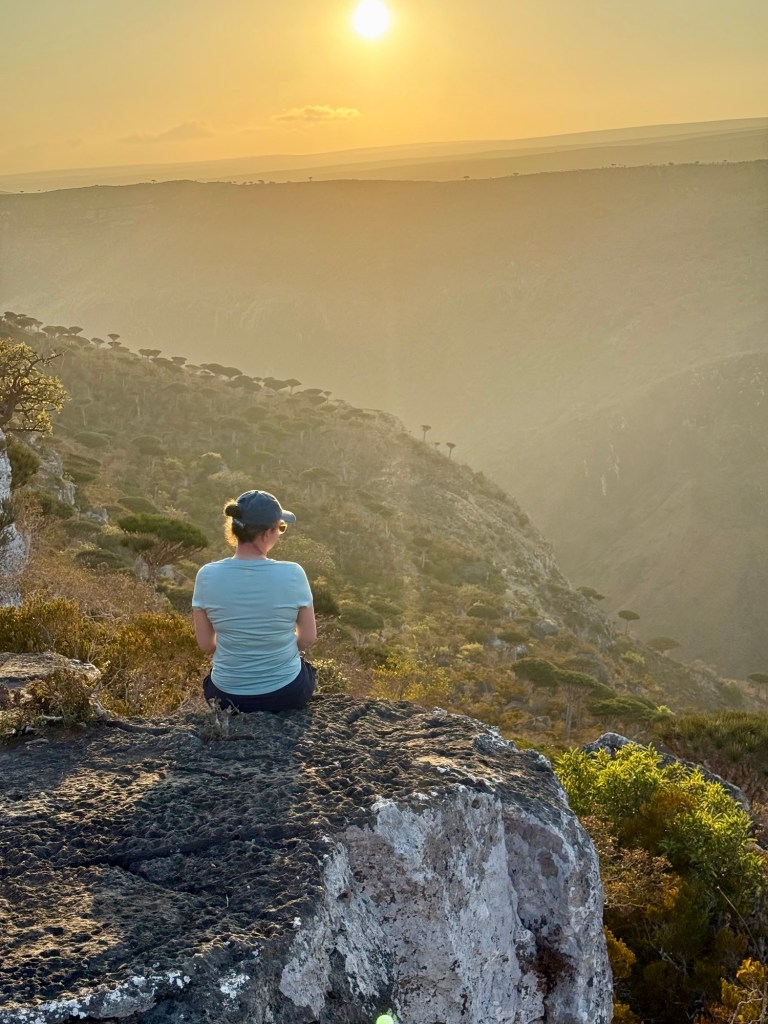
Day 4: Up again early to drive back down the other side of the mountain stopping to hike to a view point above the Dragon Blood Forest.
We then drove to Nugged arriving early enough to get a great spot on the beach for camping before the other tour groups arrived. One of the cars needed to go to Hadibo to have some repairs done so we spent the afternoon on the beach, swimming (although there was some pretty big waves) and ,making full use of the actual showers!
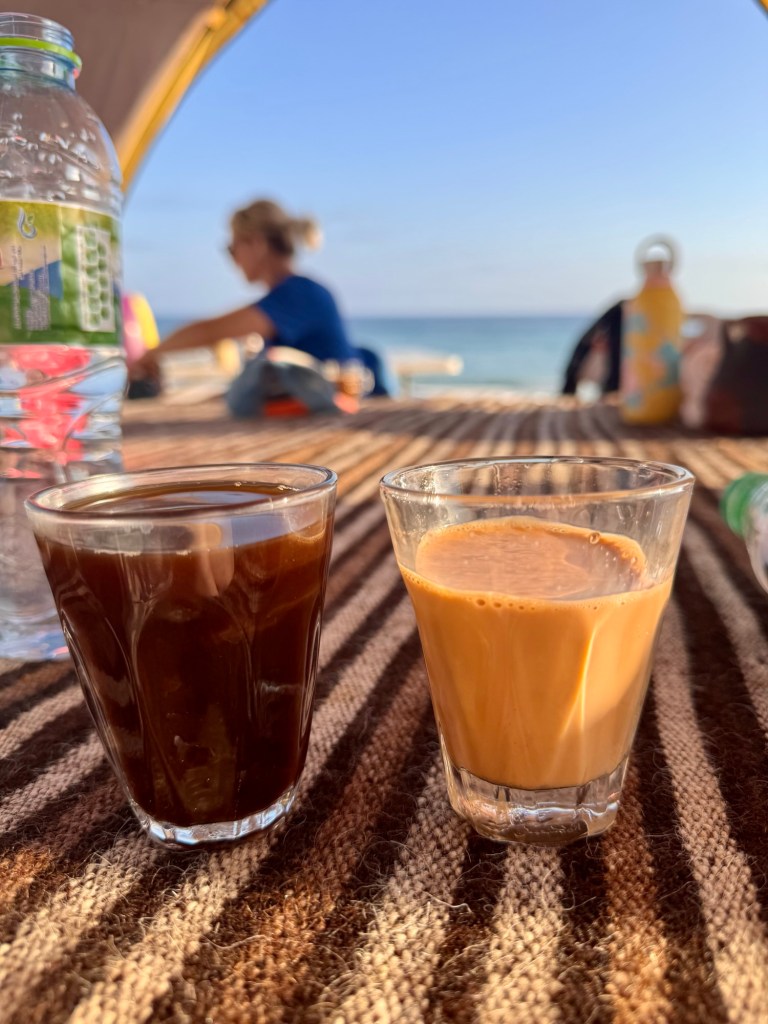
We drove down the coast to Zaheg sand dunes and sat on the top of the dunes to watch the sunset. Here there were locals with camels that you could ride for a fee and we drank Yemani Coffee which is a spice infused milk and doesn’t actually contain coffee.
Night 4 was spent camping on the beach. There was an actual toilet block with flushing toilets and showers.
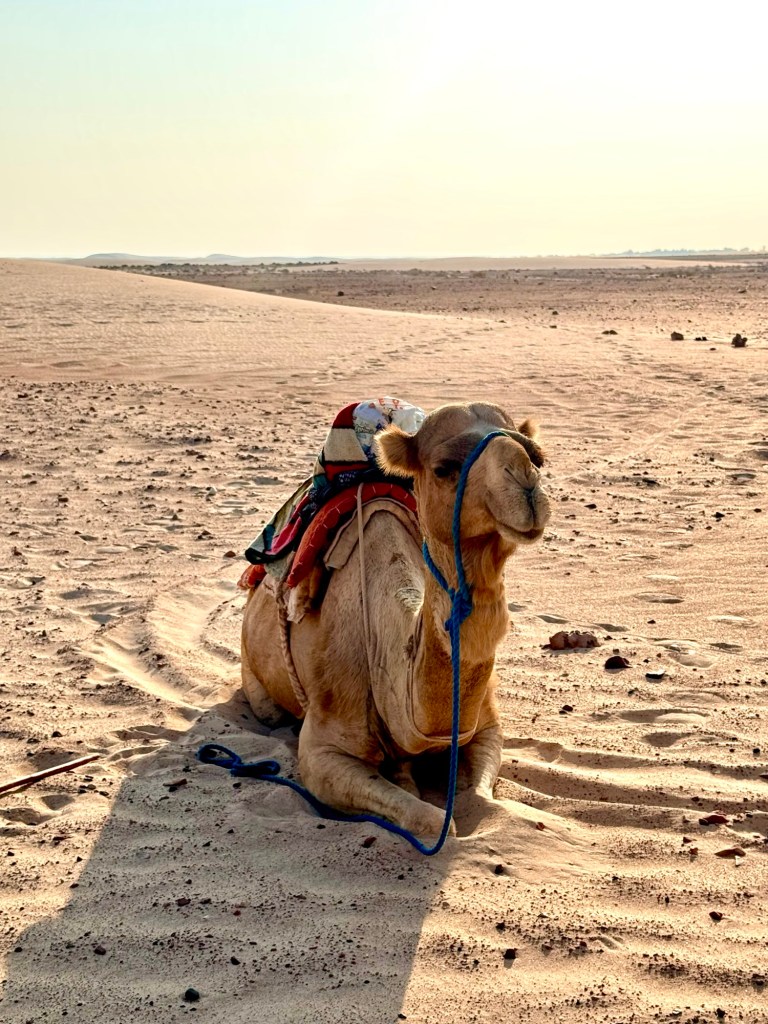

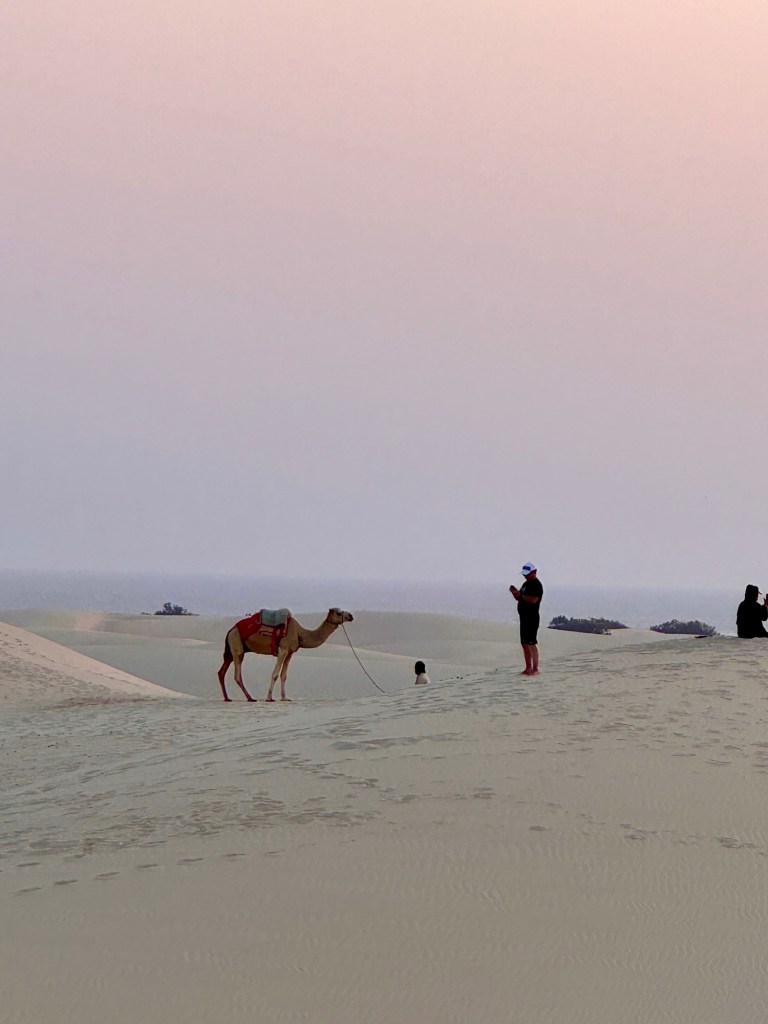
Day 5: Up and packed this morning to set off for Kalishan Canyon stopping to explore a local cave first. We drove along the coast with some stunning views and then up a mountain and then once we had gone as far as possible by car we hiked down in to the canyon. As we were hiking down we could see small pools of water but then we got to the bottom and crossed a small stream and then all of a sudden we were in a beautiful wadi filled with green water. We swam for a couple of hours and watched some of the locals jumping off the rocks in to the water.
The hike back out was hard as it was midday, very hot and all uphill but doable at a steady pace. I’ve never been so thrilled to have an ice cold Pepsi!
We drove a little further for lunch and then continued driving to Dihammri Marine protected area. Here you can rent snorkels if you haven’t brought your own and snorkel with the local marine life.
Night 5 was at a newish campsite over looking the Arabian Sea, we were the only group at this campsite and had three toilet cubicles with a mixture of sit down and squat toilets and one with a shower. Very very basic but did the job. Not only was this campsite amazingly peaceful, we also woke up to a pod of a couple of hundred dolphin swimming just off the coast.

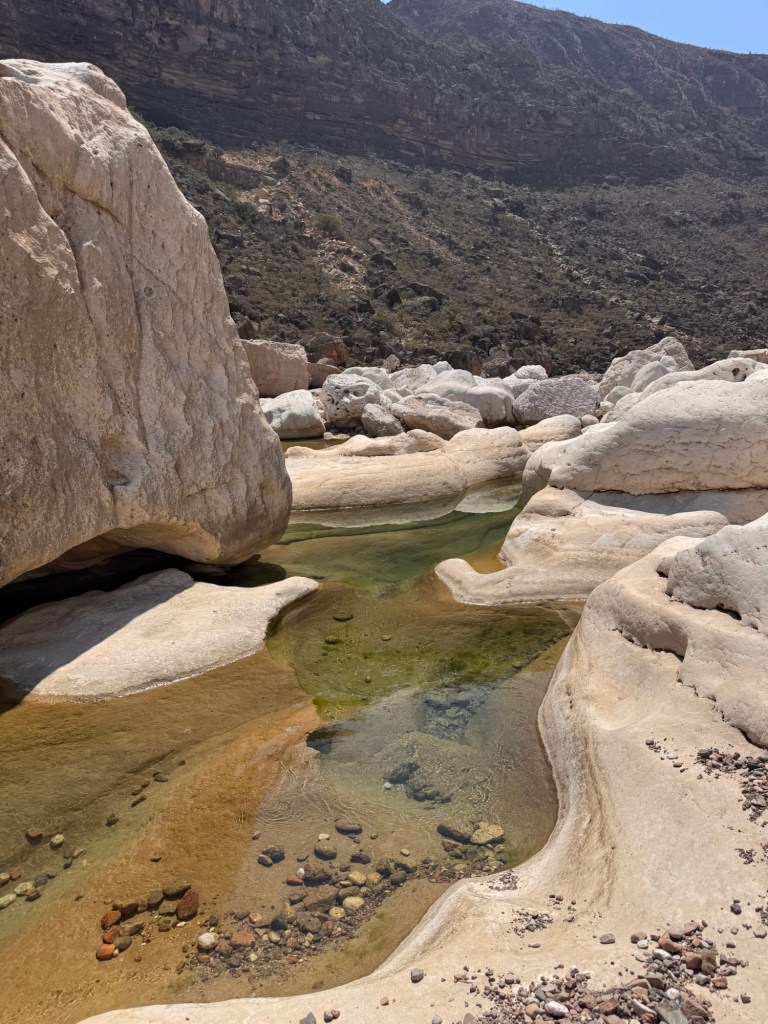
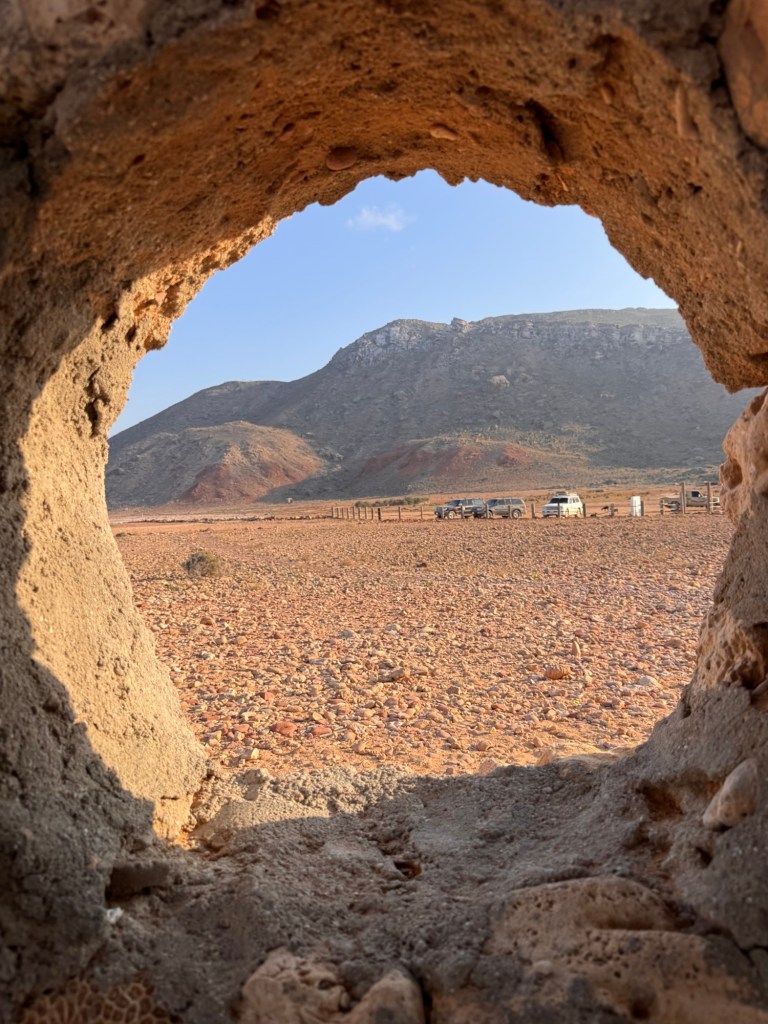
Day 6: Again up and packed ready to head back up a mountain to Homhil Protected Area where we took a shortish walk along a wadi to a natural infinity pool over looking the most amazing views. Again the water was clear and green and we swam in the watering took some amazing photos and drone footage.
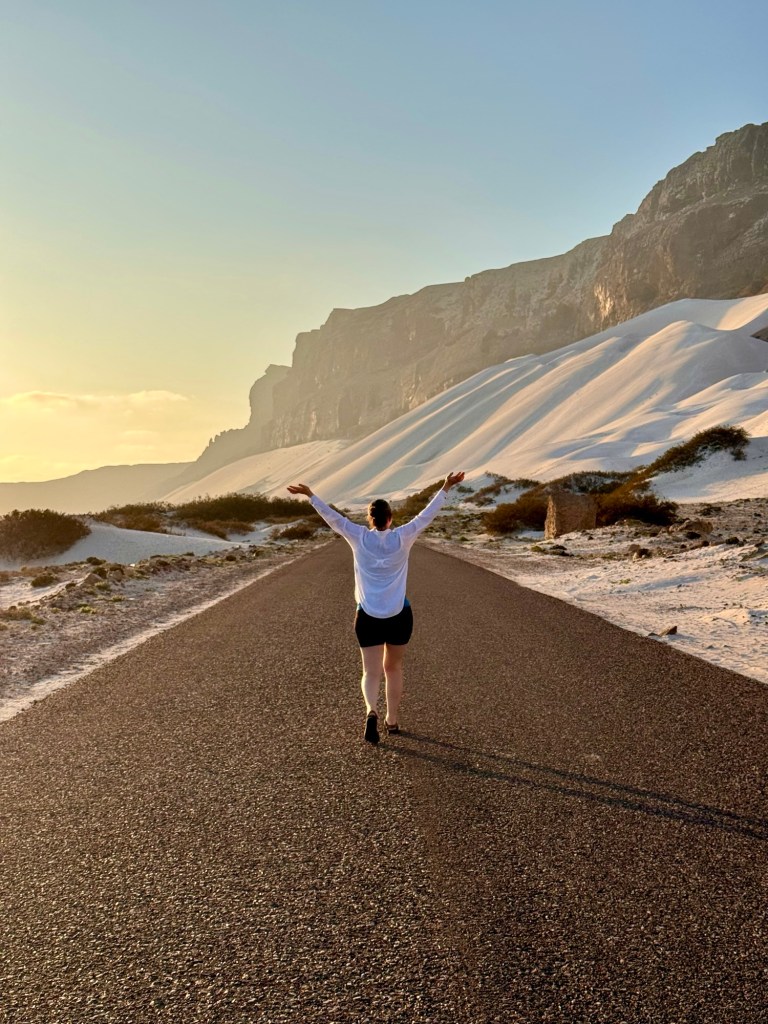
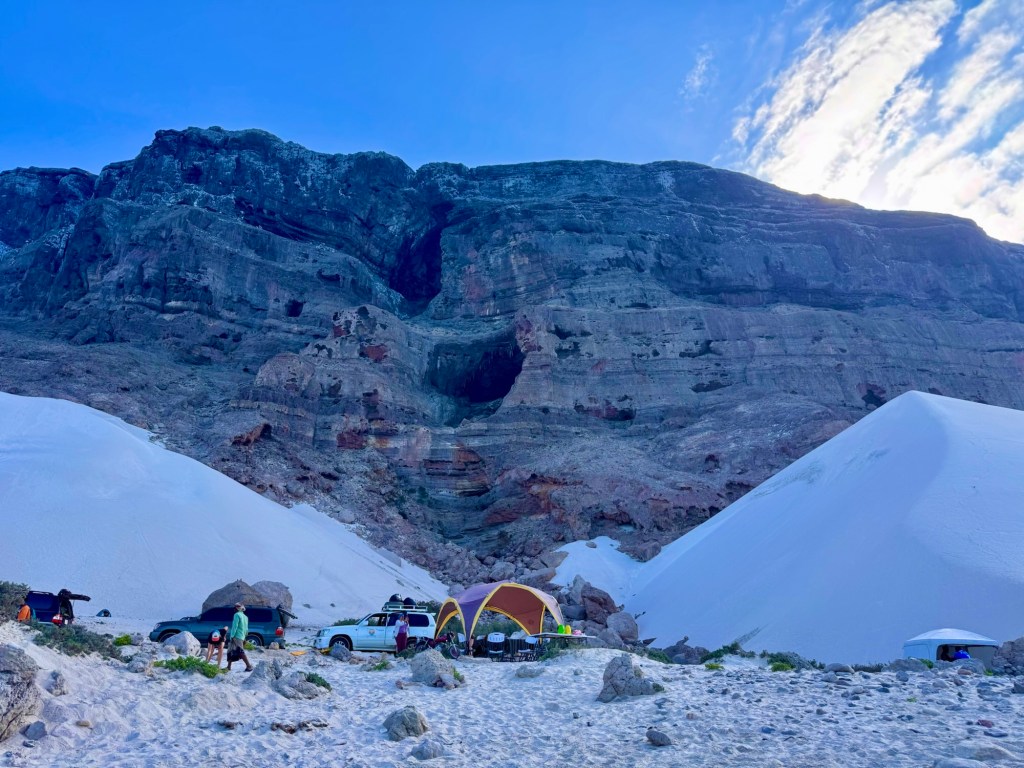
We headed back to the cars and drove back to the previous night’s camp for lunch before setting off for our last campsite of the trip on the beach at Ras Erisel. We had the afternoon to relax and swim and also climb the huge sand dunes that tower above the beach.
Night 6 was spent camping on the beach with no facilities other than a freshwater stream that came down from the mountain and was channelled to the beach through a pipe that acted as a shower.
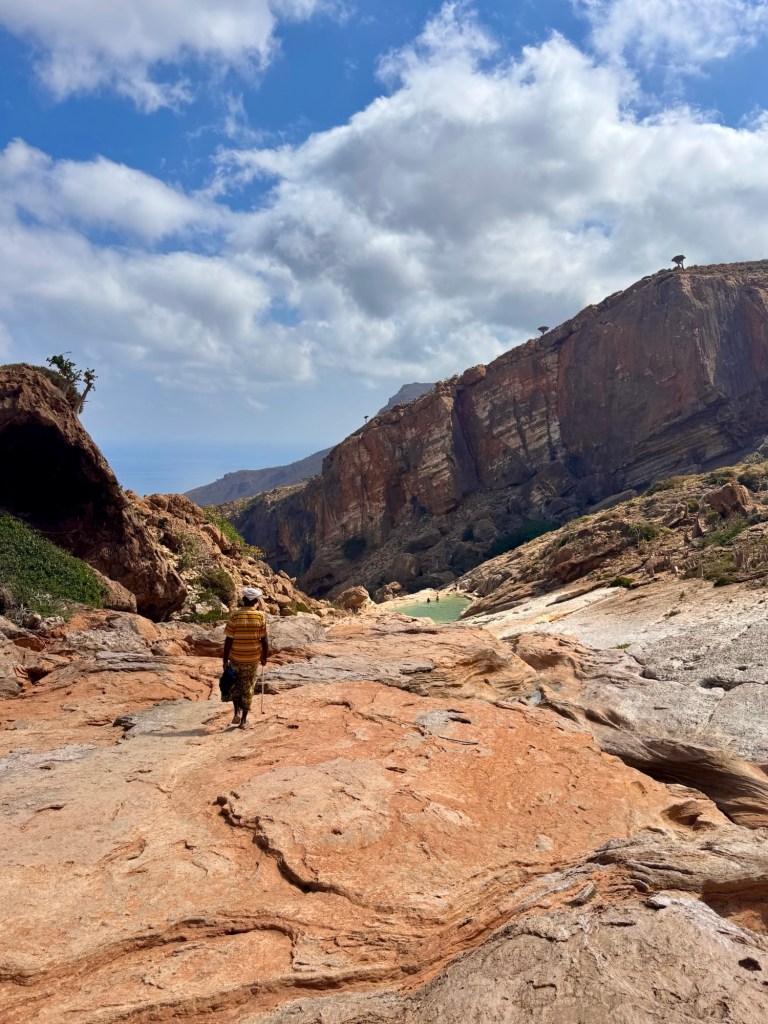


Day 7: We were up even earlier today to watch the sun rise from the sand dunes. We drove a short way down the road and had the option to climb to the top of the sand dunes (sand dunes are really hard to climb). The sun rise was spectacular!
The plan the morning was to hike up to a Hoq Cave which is famous for sheltering many of the population of the island during monsoons. The hike up takes about 90 minutes and we really didn’t fancy it in the heat so instead our guide organised for us to go and visit a local school instead.
The school visit was probably one of the highlights of the trip, we met the teachers who talked to us about the school. We had the opportunity to sit in one of the classrooms while the children were having a break and learn to count, it was fascinating to learn how the school system works in Socotra.
We were also invited to visit a local family for tea and learned about traditional Socotran greetings.
Before dinner we drove to the point where the Arabian Sea meets the Indian Ocean and watched the sunset.
Night 7 was spent at the same camp site as night 6.

Day 8: A final breakfast at the beach and then we set off for the airport. On the way we drove through Hadibo and got the opportunity to stop at a women’s collective to buy some hand made souvenirs.
The airport takes a little time to get through as there are various security checks of bags, passports and visas before you get through to the gate and then a further baggage scan before you are allowed to get on the plane.
Food:
As a vegetarian I am always prepared to eat rice and bread for a week when travelling to places that aren’t very vegetarian friendly. I was so wrong with this one though. The food during the week was excellent and was 3 freshly cooked meals a day as well as snacks and drinks.
For the meat eaters in the group the meals were mainly fish, one night there was goat on the menu and then a few days there was chicken. The meat every day was fresh and freshly prepared and cooked. Most of the group didn’t eat fish though so we ended up with a vegetarian dish every night and then the fish as a side option.
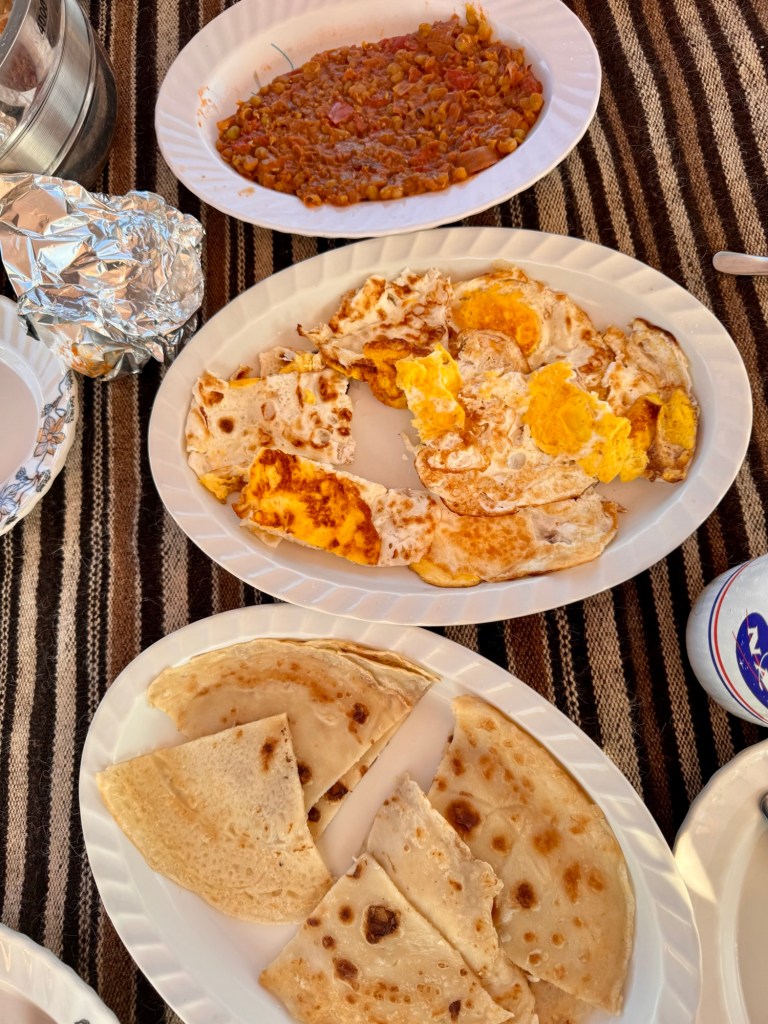
The vegetarian choice was different every day although variations on a theme. Our guide called the vegetarian dish soup but it was more of a really flavourful vegetable stew. We usually had a rice dish at lunch and then pasta in the evening with the vegetarian dish and meat. Some days there were also French fries and every meal also had flat bread and various vegetable sides.
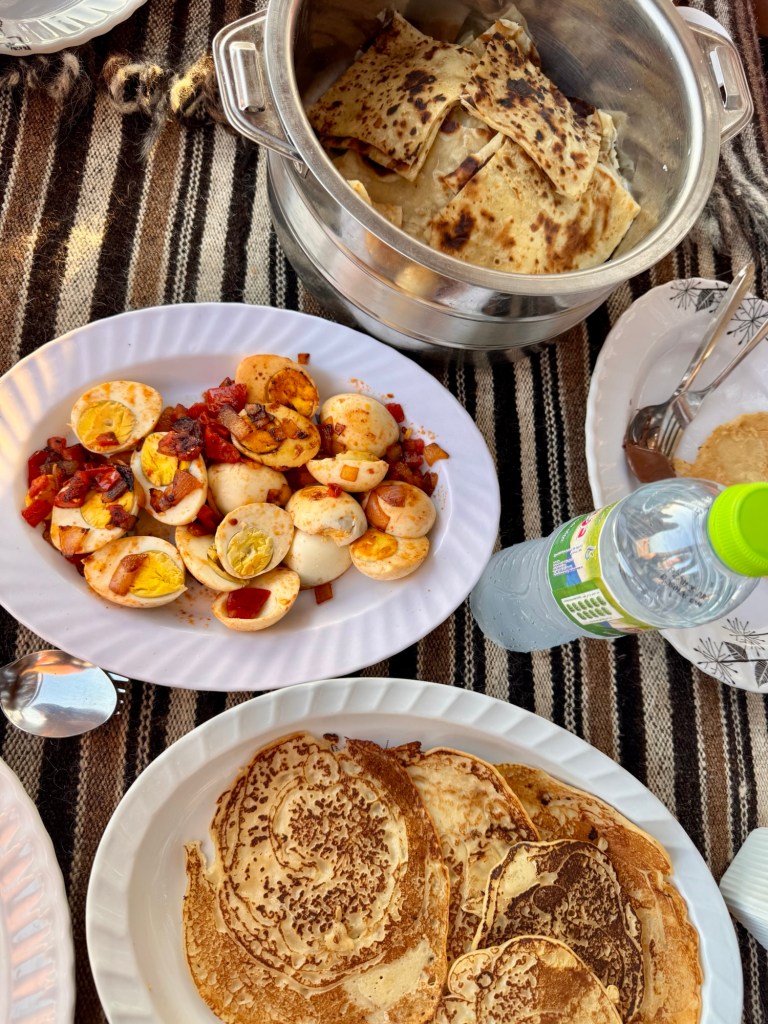
Breakfast was usually a selection of bread, laughing cow cheese, eggs and beans.
Coffee and tea was always available and we carried a huge cool box around with us full of ice to keep the bottles of water and Pepsi cold.
The meals weren’t hugely varied but we really delicious and I felt like I’d had a detox from sugar during the week. We were able to stop at local shops in some places if we wanted to get snacks and drinks.
Sleeping arrangements
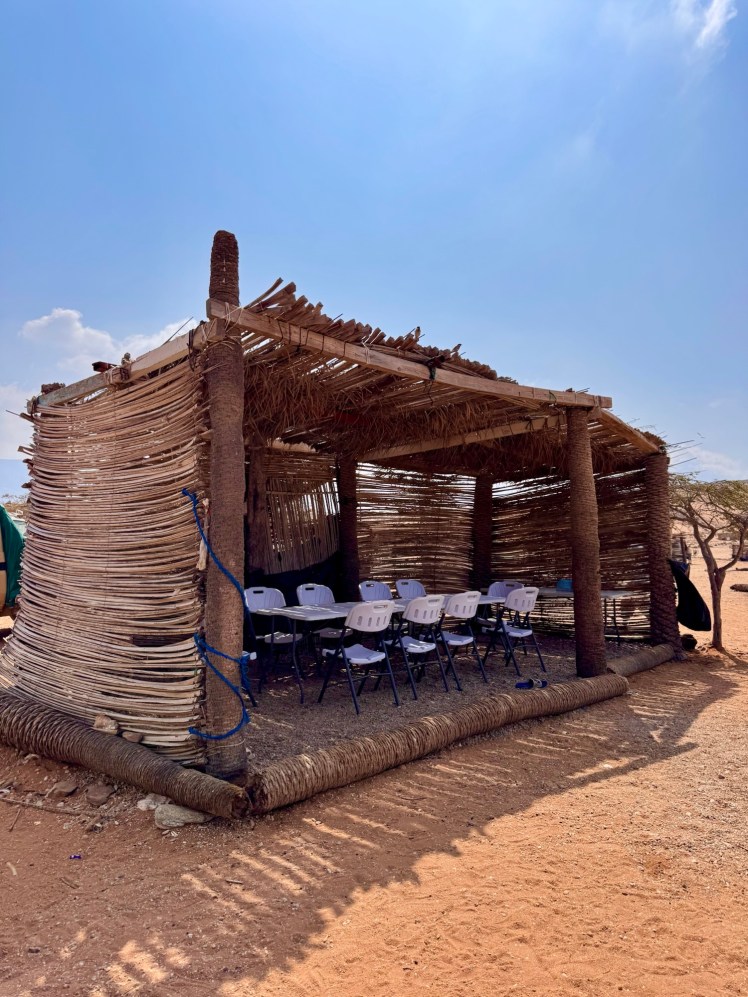
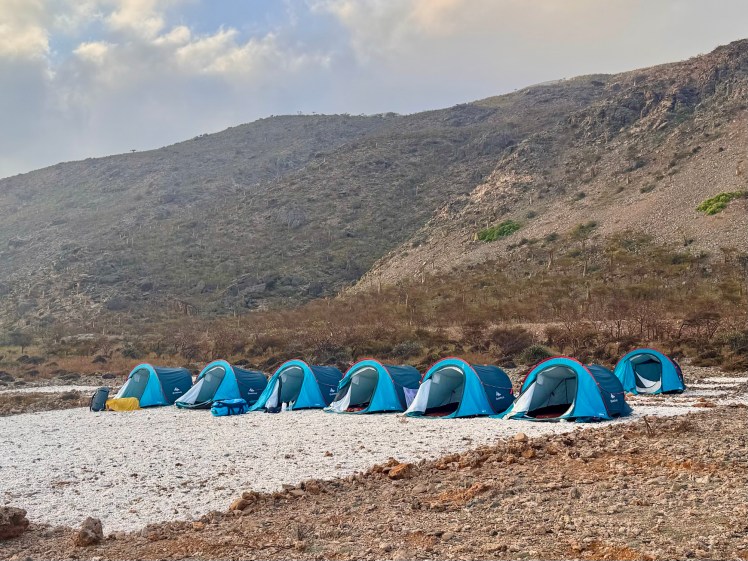
There are hotels on Socotra but we were told that camping was a much nicer option. We each had our own one man tent for the week which was put up and packed away each night by our guide and drivers.Each tent comes with a foam mattress. pillow and blanket. Once these were allocated on the first day they made sure that we kept the same bedding for the week.
I had put a Self Inflating mattress and pillow in my bag but I took them out last minute and I’m glad I did because I didn’t need them. If you need a little extra comfort it may be worth bringing though.
We did drive past one of the hotels in Hadibo and whilst it looked fine from the outside, the area around the hotel was nowhere near as nice as some of the stunning spots we had camped in during the week.
At most camping spots there were several other groups and the types of tents varied between groups, so if you would rather have a bit of extra space, the ability to stand up or a toilet tent then it’s probably possible.
The bathroom situation
Socotra is an adventure and you have to be comfortable with a wild wee and a squat toilet. If there was toilets they were very basic. There were toilets in the dragon blood forest but they weren’t open yet so it was a case of finding a bush, which was fine when we arrived and there was no one else there but not so great the next morning when there was about 10 different groups surrounding us and someone flying a drone!
Tissues were provided but I’d definitely recommend taking wet wipes and nappy bags just to make things a little easier.
Transport
We had 3 4x4s for the week and tended to stick to riding in the same car. The cars carried all the camping equipment as well as all our luggage. The drivers had unbelievable skills in not only off-roading, driving up mountains and over beaches but also in fixing any issues with the cars.
Internet
One of the cars had a Starlink so we had internet intermittently which was good enough to communicate with home and use social media.
An Abu Dhabi eSIM should also work on the island but again internet coverage is quite patchy.
Thoughts on Socotra
Socotra is up there as one of the most amazing places I have visited. It’s the most biodiverse places I have ever seen with stunning sandy beaches, rugged mountains, alien trees and the most amazing turquoise sea. If you are in to rocks then the geology is fascinating with many different types of rocks.
The Socotran people are friendly and welcoming and I hope that the island doesn’t loose its identity to mass tourism. Its unspoiltness makes it so unique and the fact so few people get to visit every year.
Was it safe?
Totally safe! We had our guide and drivers with us at all times but most of the time we were in the middle of nowhere with only other tourists around. When we did meet local Socotrans they were all lovely. There was quite a bit of security at the airport but nothing to be concerned about.
How to get there?
There is an Air Arabia charter flight that runs once or twice a week from Abu Dhabi. This can only be booked via WhatsApp. There are also flights from Egypt and Yemen mainland.
Money
The trip was paid for in US dollars and then we had extra dollars for spending and tips. Our drivers converted any money we wanted to spend for us (there was only a couple of occasions that there was something to spend money on).
What I was pleased I took with me:
- A solar phone charger and power banks. We were able to Charge power banks and phones in the car but we were limited to the number of sockets so it was useful having a couple of power banks. I also took a solar power bank which worked well.
- A couple of travel towels. We spent a lot of time in the water so it was good to have something that was quick drying and didn’t take up a lot of space.
- Nappy bags. These were useful for putting wet things in, having a small rubbish bag in the tented a host of other reasons.
- Snacks. The food was amazing but it was nice to have a few snacks for during the day or pre dinner. Make sure you close non meltable snacks though.
- Water shoes. I had both water shoes and Teva sandals. Both really useful for the amount of times we walked through water on the beach and in wadis and there were sharp stones, shells, marine life or rocks.
- Packing cubes. There was a lot of packing and unpacking so it was useful to have everything in cubes or pouches so that it was easy to find things and pack quickly.
- A lightweight sleeping bag for extra warmth and comfort at night although it wasn’t always needed.
- A mixture of layers. It was very hot during the day but did get cool at night.
What I wished I had taken:
- Another pair of flip flips as my Teva sandals were often wet and it would have been nice to have a dry, clean pair of flip flops to put on in the evening.
- More loose clothes. Have you ever tried putting a pair of leggings on in a hot, one man tent while you are slightly damp and a bit sandy?
- More bags to put wet, dirty, open things in.
- Some donations for the school we visited and gifts for our guides and drivers.
 Go everywhere, Do everything